12 Easy Ways to Save $200 a Month on Your Electric Bill
Last updated: February 21, 2026
Your electric bill doesn't have to be a budget buster. Most households waste hundreds of dollars every year on electricity they don't even realize they're using.
The good news? You can slash your electric bill by $200 or more each month without making major renovations or lifestyle sacrifices. These 12 simple changes add up to serious savings, and most take less than an hour to implement.
Why Your Electric Bill Is So High
Before we dive into solutions, let's talk about where your money is going. The average American household spends about $1,500 per year on electricity, but many families pay significantly more.
Your biggest energy hogs are usually heating and cooling (about 50% of your bill), water heating (18%), appliances (15%), and lighting (12%). The remaining 5% comes from electronics and other devices.
Understanding these percentages helps you prioritize which changes will give you the biggest bang for your buck. Let's start with the low-hanging fruit.
1. Switch to LED Bulbs Everywhere
This is the easiest change on the list, and it pays for itself within months. LED bulbs use 75% less energy than traditional incandescent bulbs and last 25 times longer.
If you replace 20 bulbs in your home with LEDs, you'll save about $225 per year. That's almost $19 per month for a one-time investment of around $40.
Start with the lights you use most often, like kitchen and living room fixtures. Within a year, you'll have your money back plus ongoing savings.
Monthly savings: $19
2. Install a Smart Thermostat
A smart thermostat learns your schedule and adjusts temperatures automatically when you're asleep or away. This simple device can reduce heating and cooling costs by 10-23%.
For the average household spending $100 per month on heating and cooling, that's $10-23 in monthly savings. Models like the Nest or Ecobee pay for themselves in less than two years.
Installation takes about 30 minutes if you're replacing an existing thermostat. Many utility companies even offer rebates that reduce the upfront cost.
Monthly savings: $15-25
3. Eliminate Vampire Energy with Power Strips
Devices on standby mode still draw power, costing the average household about $100-200 per year. This "vampire energy" comes from TVs, game consoles, phone chargers, and kitchen appliances left plugged in.
Smart power strips cut power to devices when they're not in use. Place them in your entertainment center, home office, and kitchen to eliminate this waste.
You can also manually unplug devices, but power strips make it as easy as flipping a switch. This is one of those changes you make once and forget about.
Monthly savings: $10-15
4. Use Ceiling Fans Strategically
Ceiling fans use about 1/20th the energy of air conditioning and can make a room feel 4-8 degrees cooler through wind chill effect. This means you can raise your thermostat setting and still feel comfortable.
For every degree you raise your thermostat in summer, you save about 3% on cooling costs. Using fans to offset a 3-4 degree increase saves $15-20 monthly during warm months.
Remember to reverse your fans in winter so they push warm air down from the ceiling. This helps your heating system work more efficiently.
Monthly savings: $15-20 (seasonal)
5. Seal Air Leaks with Weatherstripping
Gaps around doors and windows let expensive conditioned air escape. Weatherstripping these areas is cheap, easy, and can reduce heating and cooling costs by 5-10%.
A $20 weatherstripping kit from the hardware store can save you $5-10 per month year-round. Focus on exterior doors first, then move to windows that you can feel drafts around.
Don't forget the bottom of doors. Door sweeps are incredibly effective and cost just a few dollars each.
Monthly savings: $8-12
6. Wash Laundry in Cold Water
About 90% of the energy your washing machine uses goes to heating water. Switching to cold water for most loads cuts that energy use dramatically.
Modern detergents work just as well in cold water, and your clothes will actually last longer without the heat. The average household doing 8-10 loads per week saves about $60 per year.
Reserve hot water for heavily soiled items or sanitizing when someone's been sick. Everything else can go cold.
Monthly savings: $5-7
7. Air Dry Your Dishes
Your dishwasher's heated dry cycle uses a surprising amount of electricity. Turning it off and opening the door to let dishes air dry costs you nothing and saves about $30-40 per year.
Most modern dishwashers have an "air dry" or "energy saver" setting that does this automatically. If yours doesn't, just pop the door open when the wash cycle finishes.
Dishes dry completely overnight, and you'll extend the life of plastic items that can warp from heat. If you need help maintaining your dishwasher, check out our guide on how to deep clean your dishwasher.
Monthly savings: $3-4
8. Take Shorter Showers
This one saves on both water and electricity if you have an electric water heater. The average shower uses 2.5 gallons per minute, and heating that water costs about $0.50 per 10-minute shower.
Cut your shower time from 10 minutes to 5 minutes, and you'll save about $50 per year per person. For a family of four, that's $200 annually or about $17 per month.
Install a low-flow showerhead for even bigger savings. You'll use less hot water without sacrificing pressure.
Monthly savings: $5-17 (depending on household size)
9. Install Smart Plugs for Large Appliances
Smart plugs let you control and schedule when devices receive power. Use them for coffee makers, space heaters, window AC units, and other energy-hungry appliances.
Program your coffee maker to turn on 30 minutes before you wake up instead of leaving it in standby mode all night. Schedule space heaters to turn off automatically when you leave for work.
These small changes add up to about $50-75 per year. Smart plugs cost $10-20 each and pay for themselves within months.
Monthly savings: $5-8
10. Adjust Your Water Heater Temperature
Most water heaters come set to 140°F, but 120°F is hot enough for all household needs and reduces heating costs by 6-10%. This simple adjustment saves $20-30 per year with zero ongoing effort.
Locate the thermostat on your water heater (usually behind a panel) and adjust it down. If you have a tankless water heater, there's usually a digital control panel.
While you're there, add an insulation blanket to older water heaters for another $20-30 in annual savings. If your water heater is acting up, our guide on fixing a running toilet also covers common plumbing issues.
Monthly savings: $3-5
11. Use Timers for Outdoor Lighting
Outdoor lights left on all day waste electricity you're literally not seeing. Timer switches cost $10-15 and ensure lights only run when needed.
Motion sensor lights are even better for security purposes. They provide light when someone approaches but don't waste energy the rest of the time.
If you currently leave outdoor lights on 24/7, switching to timers or sensors saves about $50-75 per year depending on the number of fixtures.
Monthly savings: $4-6
12. Schedule a Professional Energy Audit
Many utility companies offer free or discounted energy audits that identify exactly where you're wasting money. An auditor uses thermal imaging to find air leaks, checks insulation levels, and tests appliance efficiency.
The average audit uncovers savings opportunities worth $200-400 per year. Some utilities even provide free weatherstripping, bulbs, or low-flow showerheads during the visit.
Call your utility company to ask about their audit program. This single phone call could be worth thousands of dollars over the next few years.
Monthly savings: Varies, potentially $20-40 after implementing recommendations
The Math: How These Changes Add Up
Let's add up the conservative estimates from all 12 tips:
- LED bulbs: $19/month
- Smart thermostat: $15/month
- Power strips: $10/month
- Ceiling fans: $15/month (averaged year-round)
- Weatherstripping: $8/month
- Cold water laundry: $5/month
- Air dry dishes: $3/month
- Shorter showers: $10/month (family average)
- Smart plugs: $5/month
- Water heater adjustment: $3/month
- Outdoor light timers: $4/month
- Energy audit recommendations: $20/month
Total: $117-$200+ per month
The beauty of these changes is that they're mostly one-and-done. You make the switch once, and the savings keep rolling in month after month, year after year.
Start With the Biggest Impact
Don't feel like you need to implement all 12 changes at once. Start with the ones that offer the biggest return for your specific situation.
If you live in a hot climate, prioritize the smart thermostat and ceiling fans. In cold climates, focus on weatherstripping and water heater adjustments first.
Pick three changes to implement this week, three more next month, and you'll be well on your way to cutting your electric bill in half. Combined with strategies to cut your grocery bill in half, you could save $500+ per month on household expenses. Don't forget about water costs either—our guide on how to lower your water bill completes the utility savings trifecta.
The Long-Term Benefits
Beyond the immediate savings, these energy-efficient habits reduce your carbon footprint and extend the life of your appliances and HVAC system. You're not just saving money — you're reducing maintenance costs and replacement expenses down the road.
Many of these upgrades also increase your home's value. Energy-efficient homes sell faster and command higher prices than comparable homes with outdated systems.
Plus, there's something satisfying about knowing you're not wasting money on electricity you're not even using. That peace of mind is worth something too.
Make It Automatic
The best money-saving strategies are the ones you don't have to think about. Once you install LEDs, smart thermostats, power strips, and timers, they work for you 24/7 without any ongoing effort.
This is the opposite of trying to remember to turn off lights or unplug devices manually. Automation removes willpower from the equation.
Set up your systems once, then sit back and watch your electric bill drop month after month. The savings are practically effortless.
Your Action Plan
Here's how to get started today:
- Replace your five most-used bulbs with LEDs this week
- Order a smart thermostat and schedule installation for next weekend
- Buy power strips for your entertainment center and home office
- Call your utility company to schedule a free energy audit
- Adjust your water heater temperature to 120°F
These five actions take less than three hours total and will save you at least $50-75 in your first month. Build from there.
Common Mistakes to Avoid
Don't make these errors that reduce your savings:
Running ceiling fans in empty rooms: Fans cool people, not rooms. Turn them off when you leave.
Setting your smart thermostat too aggressively: A 10-degree setback saves money, but 20 degrees makes your system work harder to recover. Stick to 5-8 degree adjustments.
Ignoring maintenance: Clean AC filters monthly and dryer vents quarterly. Dirty filters force systems to work harder and use more energy.
Buying cheap power strips: Invest in quality surge protectors with individual switches. Cheap strips fail quickly and don't protect expensive electronics.
Track your electric bill for three months after implementing these changes. You should see steady decreases that prove the changes are working.
Frequently Asked Questions
How long does it take to see savings on my electric bill?
You'll see immediate savings in your next billing cycle, though the full impact becomes clear after 2-3 months. Changes like LED bulbs and thermostat adjustments show up right away, while seasonal changes like weatherstripping are most noticeable during extreme temperatures. Most people report 20-30% lower bills within 60 days of implementing 6-8 of these changes.
Are smart thermostats worth it if I'm home all day?
Yes, even if you're home all day. Smart thermostats optimize temperature settings based on actual occupancy patterns and outside weather conditions. They prevent your system from running unnecessarily when you're in one room, sleeping, or when outdoor temperatures are mild enough to open windows. People who work from home typically save 10-15% on heating and cooling costs.
Can I really save $200 per month, or is that exaggerated?
The $200 figure represents the combined maximum savings from implementing all 12 changes in a household with above-average energy use. Your actual savings depend on your current bill, home size, climate, and which changes you implement. A household currently paying $300/month can realistically cut that to $150-180. Those with lower starting bills might save $75-125. The percentages are accurate — your absolute dollar savings scale with your usage.
What's the single most effective change I can make today?
For most households, a smart thermostat offers the biggest return on investment. It addresses heating and cooling, which represents 50% of your electric bill. The device costs $130-250 but saves $180-300 annually, paying for itself in under a year while providing savings for 10+ years. If you're not ready for that investment, switching to LED bulbs is the easiest immediate win with the fastest payback period.
Start Saving Today
You don't need to renovate your entire house or invest thousands of dollars to dramatically reduce your electric bill. These 12 simple changes prove that small adjustments add up to major savings.
Start with one or two changes this week. Track your results. Then implement more as you see your bill decrease. Looking for even more ways to save? Our guide on things to stop buying to save money identifies common expenses you can easily cut from your budget.
Your future self will thank you every time you open that electric bill and see real, measurable savings. And your bank account will thank you even more.
Related Articles
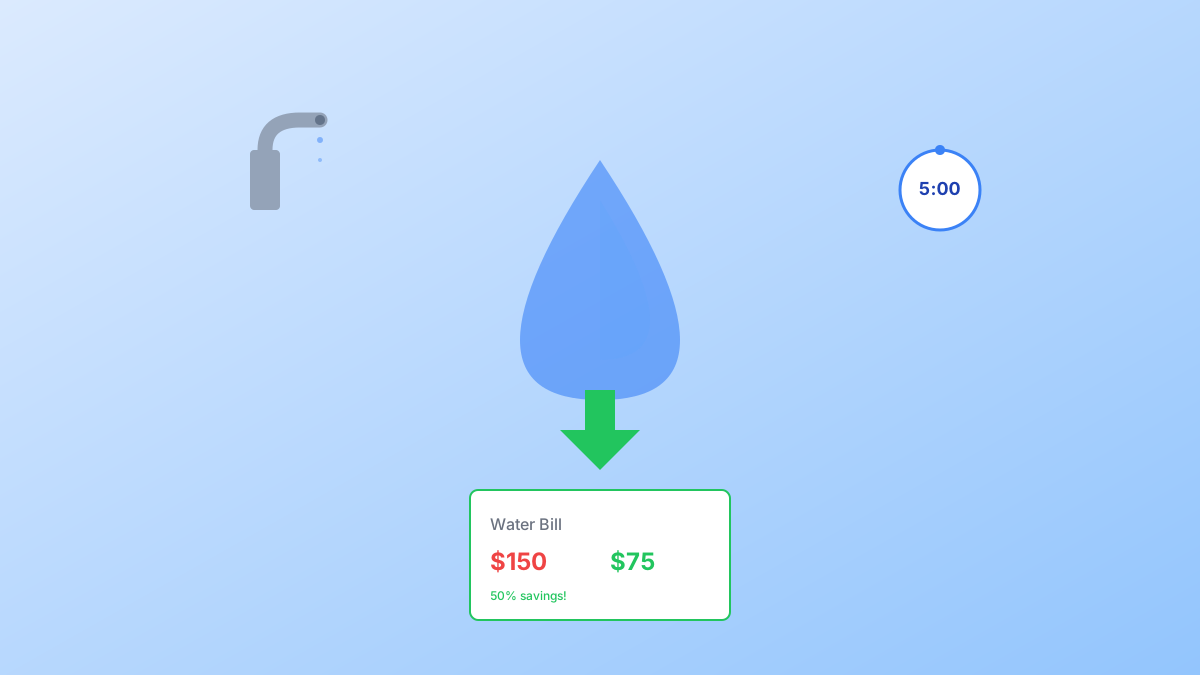
How to Lower Your Water Bill: 10 Simple Tricks That Actually Work
Your water bill doesn't have to drain your wallet. Learn 10 simple tricks to lower your water bill by 30-50% without sacrificing comfort.

15 Things to Stop Buying to Save $500 a Month
Slash your monthly spending by $500 or more by cutting these 15 unnecessary purchases. Simple swaps and habits that add up to serious savings.

15 Ways to Cut Your Grocery Bill in Half This Month
Learn 15 proven strategies to cut your grocery bill in half. Save $300+ per month with meal planning, bulk buying, and smart shopping habits.